How Industrial Automation Improves Factory Safety
Automation is often framed as an efficiency play, but its biggest impact on the factory floor is often safety. Here is how.
Efficiency Gets the Headlines — Safety Is the Real Shift
When factories talk about automation, the conversation usually starts with throughput and cost. But the more consequential change automation brings to a production floor is a reduction in the number of people exposed to repetitive strain, heavy lifting, and hazardous processes in the first place.
1. Removing People From the Most Dangerous Steps
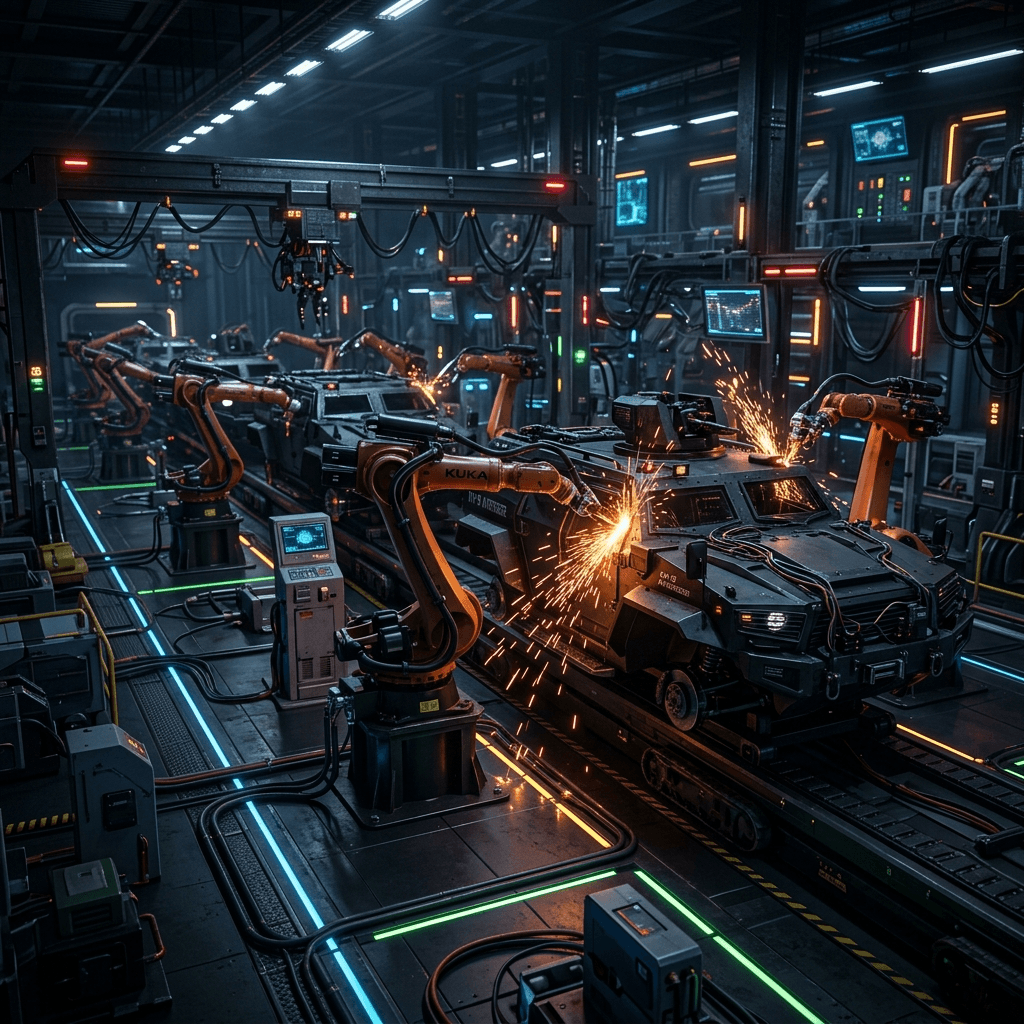
The highest-risk tasks on most production lines — high-temperature handling, heavy-load transport, repetitive high-force motion — are also the easiest to automate. Robotic systems don't fatigue, and fatigue is one of the biggest predictors of workplace injury on a factory floor.
2. Consistent, Monitored Processes
An automated process behaves the same way on hour 1 and hour 10 of a shift. That consistency shows up as fewer near-misses, because the variability that comes from human fatigue and attention drift is removed from the highest-risk steps.
3. Real-Time Monitoring Changes the Response Time
Modern industrial automation systems carry sensors as standard, not as an add-on. That means anomalies — a jam, an overheating motor, an out-of-tolerance part — get flagged in real time rather than discovered at the next manual inspection.
4. Automation Doesn't Mean Removing People From the Floor
The goal of a well-designed automation system isn't an empty factory — it's shifting people away from the highest-risk, most repetitive tasks and toward supervision, quality control, and the judgment calls machines still can't make.
The takeaway: when evaluating an automation project, safety metrics deserve the same weight as throughput numbers in the business case — the return often shows up faster.