Robotics R&D 101: How Research Becomes a Working Robot
A look at the stages between an idea for a robotic system and a working, deployable machine — and why most of the work happens before a single part is built.
Most of the Work Happens Before the First Part Is Cut
It's tempting to picture robotics R&D as a workshop full of prototypes. In practice, the majority of the work in a well-run robotics R&D process happens before any hardware exists — in feasibility studies, requirement definition, and system architecture.
1. Feasibility First
Before committing engineering time, a feasibility study answers the questions that determine whether a project is worth building at all: is the required precision achievable, is the sensing approach reliable in the target environment, does the cost structure make sense for the intended use case.
2. Concept, Then Constraint
Early concept work deliberately stays broad — exploring multiple mechanical and control approaches before narrowing. The constraints (cost, size, power budget, regulatory requirements) then shape which concept actually gets built.
3. Rapid Prototyping Is About Learning Fast, Not Building Final Parts
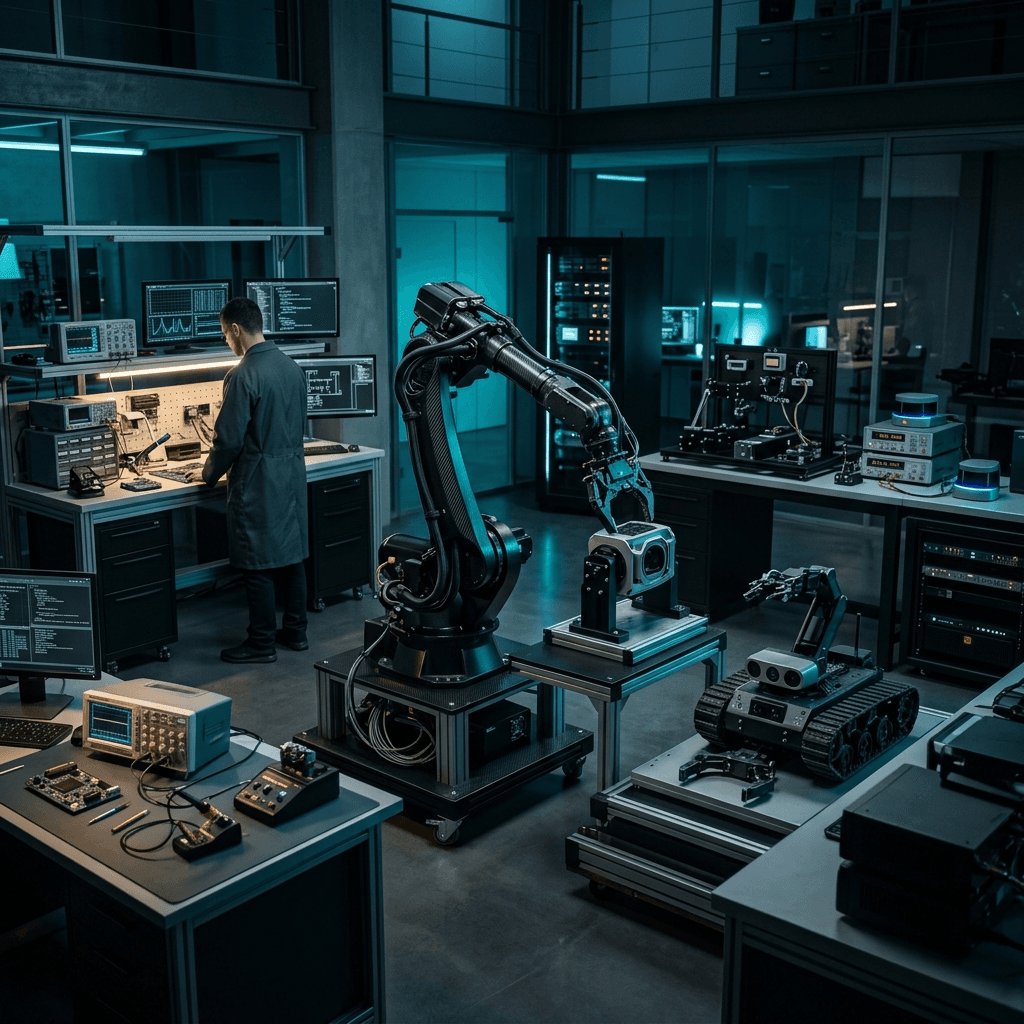
A first-stage prototype exists to answer specific open questions — does this gripper design hold this class of object, does this control loop stay stable under load — not to look or perform like the finished product.
4. AI and Control Systems Development Runs in Parallel
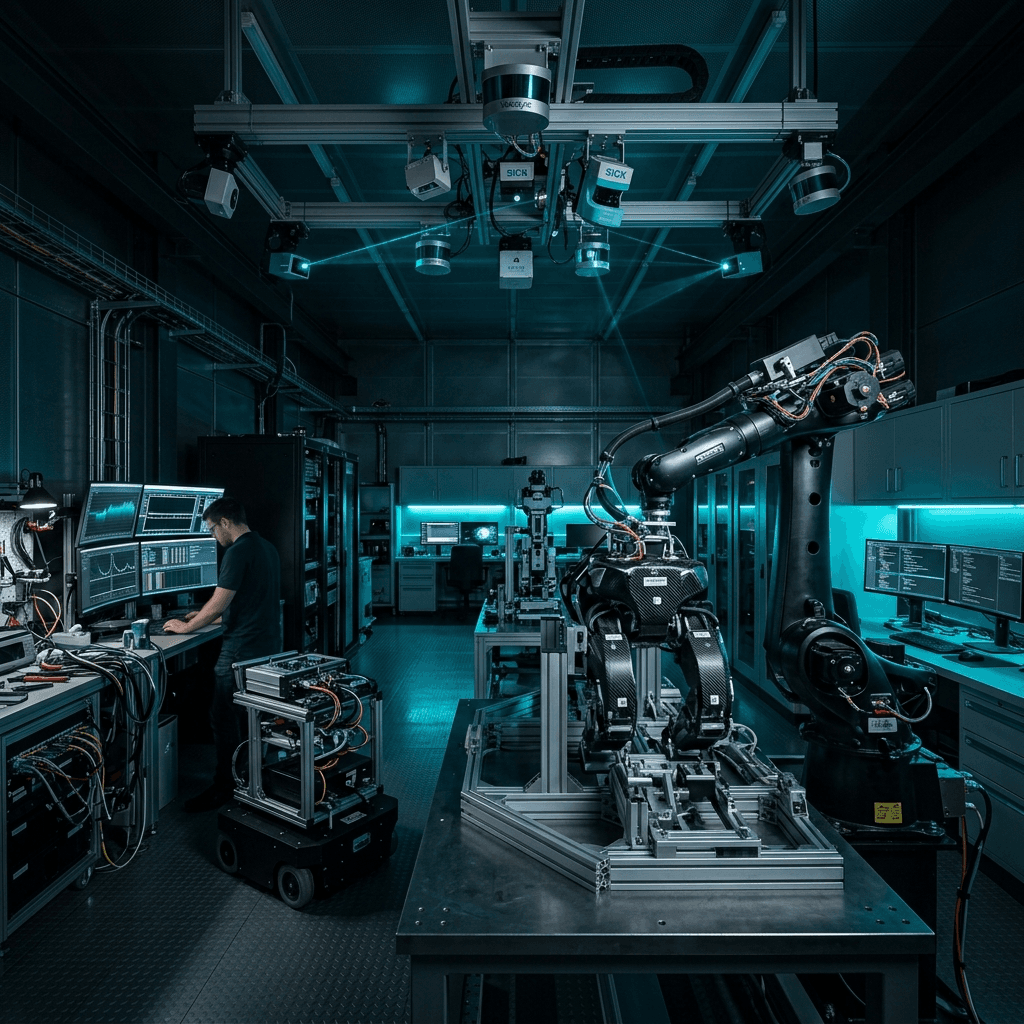
Modern robotics R&D doesn't sequence hardware first and software second. Control systems and, increasingly, AI-driven perception and decision-making are developed alongside the mechanical platform, since each constrains the other.
The takeaway: a disciplined R&D process front-loads the hard questions — which is exactly why the resulting robots are more likely to survive contact with the real world.